Patellar dislocation, whether medial or lateral, involves varying degrees of severity that require different surgical treatments aimed at stabilizing the patella, allowing normal joint function, and preventing the osteoarthritic degeneration that this condition causes over time if not treated properly.
When patellar dislocation occurs following normal or only minimally altered limb alignment and/or mild tibial torsion, surgical correction is performed, which may include trochleoplasty, transposition of the tibial tuberosity in the opposite direction of the dislocation, overlap of the capsule on the opposite side of the dislocation, and possible release of the joint capsule on the side of the dislocation.
When patellar dislocation occurs following limb misalignment due to distal femoral deformity, surgical correction is performed, which may include trochleoplasty, distal femoral corrective osteotomy, overlap of the capsule on the opposite side of the dislocation, and possible release of the joint capsule on the side of the dislocation.
When limb misalignment is due to torsional deformity of the tibia, for mild twists, the tibial tuberosity is transposed in the opposite direction of the dislocation, while in more severe cases, corrective osteotomy of the tibia is necessary. Femur and tibia deformities can coexist in severe cases and therefore require surgery on both the femur and tibia.
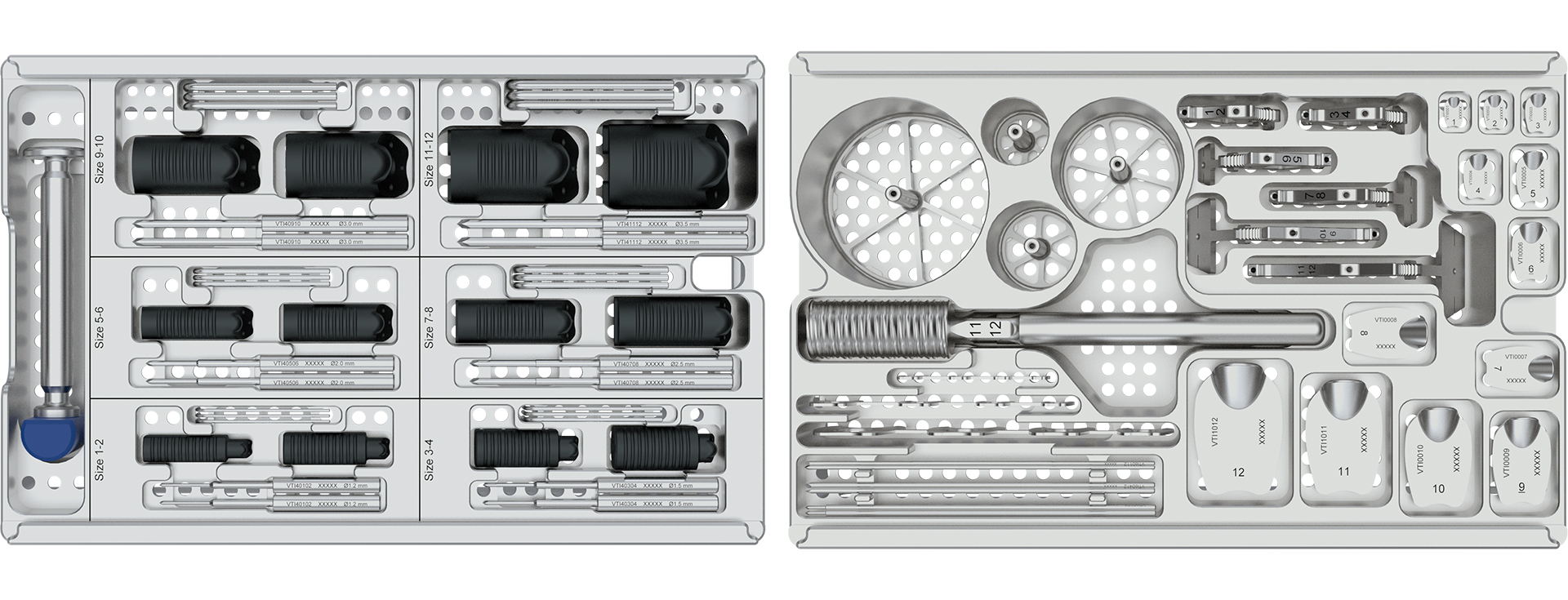
In chronic forms and in the most severe degrees of patellar dislocation, as well as in cases of recurrence due to failure of other interventions, erosion of the trochlear cartilage and its deformation require the implantation of a trochlear prosthesis, capable of recreating an effective sliding groove for the patella, as trochleoplasty would no longer be reliable.